Chat with us, powered by LiveChat
ESPAÑOL

Hair Transplant Surgery in Miami

Hair Transplant in Miami

Hair transplant surgery moves existing hair follicles from a suitable donor area to selected areas of thinning or baldness. It does not create an unlimited supply of new hair or stop the underlying cause of hair loss. An assessment is needed to determine whether surgery or another treatment is appropriate.

Dr. Carlos Spera is a surgeon certified by the American Board of Cosmetic Surgery. During consultation in Miami, discuss your diagnosis, donor hair, goals, likely coverage, scars and the limits of treatment.

What is a hair transplant?

A hair transplant redistributes healthy hair follicles from an eligible donor area, often the back or sides of the scalp. The cause and pattern of hair loss, scalp condition and available donor hair affect whether transplantation is suitable and how much coverage may be possible.

The American Academy of Dermatology hair transplant guide explains the importance of enough healthy donor hair and a proper assessment. Ask which techniques are available and appropriate in your case; a general description is not a confirmed treatment plan.

Types of hair transplant Dr. Carlos Spera offers in Miami

Follicular Unit Strip or FUT hair transplant

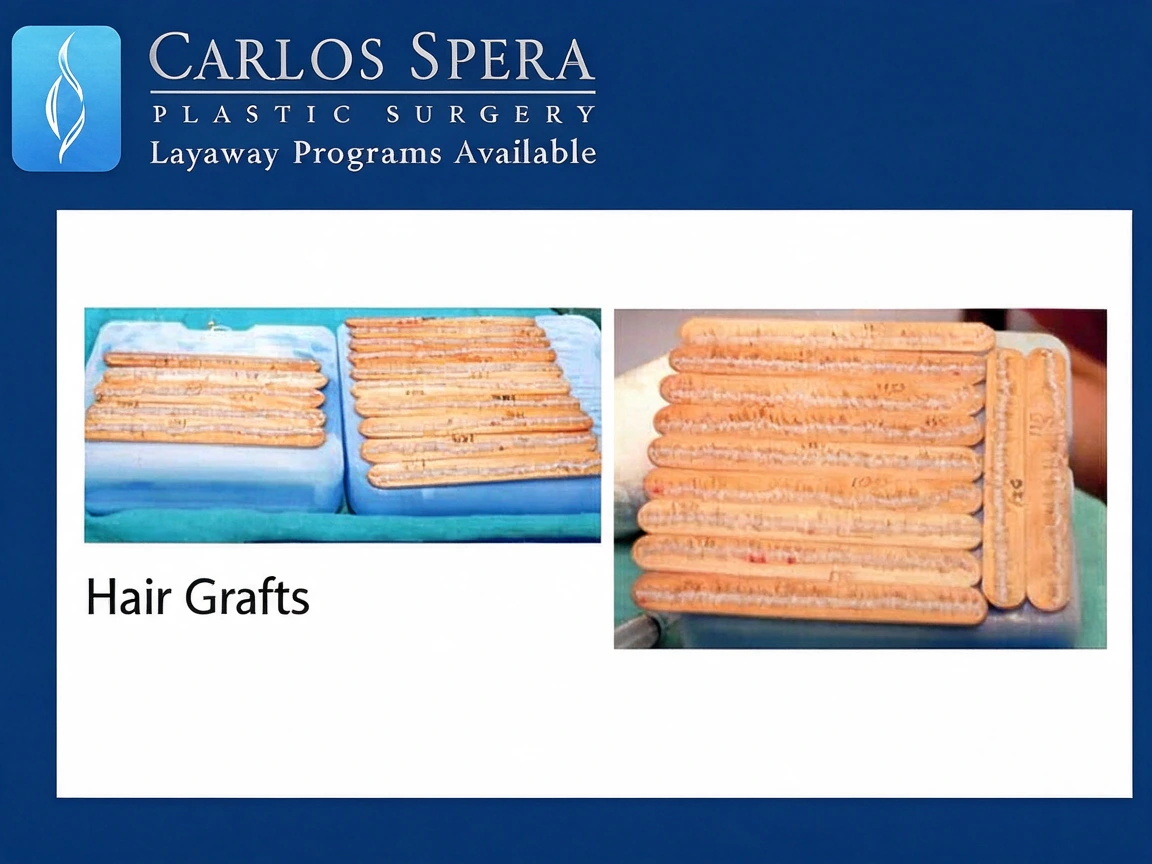
Follicular unit transplantation (FUT), also called strip harvesting, removes a strip of hair-bearing scalp from a donor area. The tissue is divided into grafts for placement in the recipient area, and the donor incision is closed. It leaves a linear donor-site scar. Graft numbers, incision size and suitability require an individual assessment.

Follicular unit extraction or FUE hair transplant

Follicular unit extraction (FUE) harvests individual follicular units rather than a strip of scalp. It produces small donor-site wounds and scars, not scar-free surgery. The donor supply, extraction pattern and planned coverage must be assessed to avoid assuming that every patient can achieve the same density.

SmartGraft FUE hair transplant

SmartGraft is a device-assisted FUE approach. The device does not remove the need for diagnosis, donor-area planning or careful surgical technique, and it does not guarantee faster recovery or better growth. Read the separate SmartGraft FUE consultation information and ask which approach is being proposed for you.

Are you an ideal candidate for a hair transplant in Miami?

Hair transplantation is not suitable for everyone. Assessment considers the cause and pattern of hair loss, healthy donor hair, scalp condition, overall health and realistic expectations. A fixed number of years of hair loss does not by itself establish candidacy. Continuing hair loss may affect future appearance and planning.

FUE or FUT hair transplant: Which is better?

Neither FUE nor FUT is the best choice for every patient. The choice depends on the cause and pattern of hair loss, available donor hair, scalp characteristics, hairstyle goals, scarring considerations and the treatment plan discussed during consultation.

Schedule Your Consultation Now

Which type of hair transplant may fit your goals?

FUT removes a donor strip and generally requires a linear closure. FUE extracts individual follicular units and leaves small donor-site scars. Both approaches require recipient-site planning and have risks. Scar visibility varies with healing, technique and hairstyle; neither method guarantees invisible scars or a particular density.

Ask about the proposed method, available donor hair, expected coverage, anesthesia, aftercare and alternatives. Follow individual instructions for wound care and return to activities rather than assuming the same recovery for both techniques.

What are the known side effects of having a hair transplant?

Hair transplant surgery has risks, including bleeding, infection, swelling, discomfort, altered sensation, itching, scars and an unsatisfactory growth or cosmetic result. Transplanted hairs may shed before regrowth. Your health, scalp condition and technique affect your individual risks.

Tell the surgical team about medicines, supplements and bleeding problems. Do not stop prescribed medication on your own. Follow the written washing, wound-care and activity instructions, and contact the team about unexpected symptoms.

How long does hair transplant in Miami last?

Growth develops gradually over months. The American Academy of Dermatology notes that results are often seen after 6 to 9 months, although some patients need 12 months. Your timeline and density may differ. Transplantation does not stop continuing hair loss in untreated areas, and a lifetime result cannot be guaranteed.

Why choose Dr. Carlos Spera for your hair transplant in Miami?

Dr. Carlos Spera, a surgeon certified by the American Board of Cosmetic Surgery, offers an individual consultation to review hair-restoration goals and treatment options. Ask about experience relevant to your diagnosis and the method proposed, who performs each part of the procedure, and realistic donor-area and scarring limits.

Schedule a consultation before choosing a procedure. A credential, device or technique does not guarantee growth, satisfaction or a scar-free result.

Frequently Asked Questions

Hair Transplant Surgery is a state-of-the-art procedure designed to restore hair by transplanting hair follicles from denser regions to areas experiencing thinning or baldness. Dr. Carlos Spera offers consultation-based planning for patients considering hair restoration and natural-looking density improvement.

If you’re experiencing noticeable hair thinning or baldness and have sufficient donor hair on the back or sides of your head, Hair Transplant Surgery might be the ideal solution for you. Suitable candidates are in good health, have realistic expectations, and understand the nature of the procedure. A consultation with Dr. Spera will provide a detailed assessment.

The plan depends on your diagnosis, donor hair and goals. FUT uses a donor strip, while FUE extracts individual follicular units. Ask which methods are offered and appropriate for you, what coverage is realistic and who will perform each part of your treatment.

Swelling, tenderness and scabbing can occur. Follow your surgical team’s instructions for washing, wound care, medications, follow-up and returning to work or exercise. Recovery varies by technique and treatment plan.

Both methods leave scars. FUE creates small donor-site scars; FUT leaves a linear donor-site scar. Visibility depends on healing, technique and hairstyle. Neither method guarantees invisible scars.

Hair transplant surgery can provide long-term growth from transplanted follicles. The transplanted hair follicles integrate with the recipient area and grow naturally. While the procedure effectively restores hair density, it’s essential to understand that the natural aging process and genetic factors may continue to influence hair density over time.

With over 30 years of dedication to the art of aesthetic surgeries, Dr. Carlos Spera stands as a trusted name in Miami. His commitment to achieving natural-looking results, combined with his expertise in hair restoration techniques, supports careful planning, guidance, and natural-looking hair restoration goals.

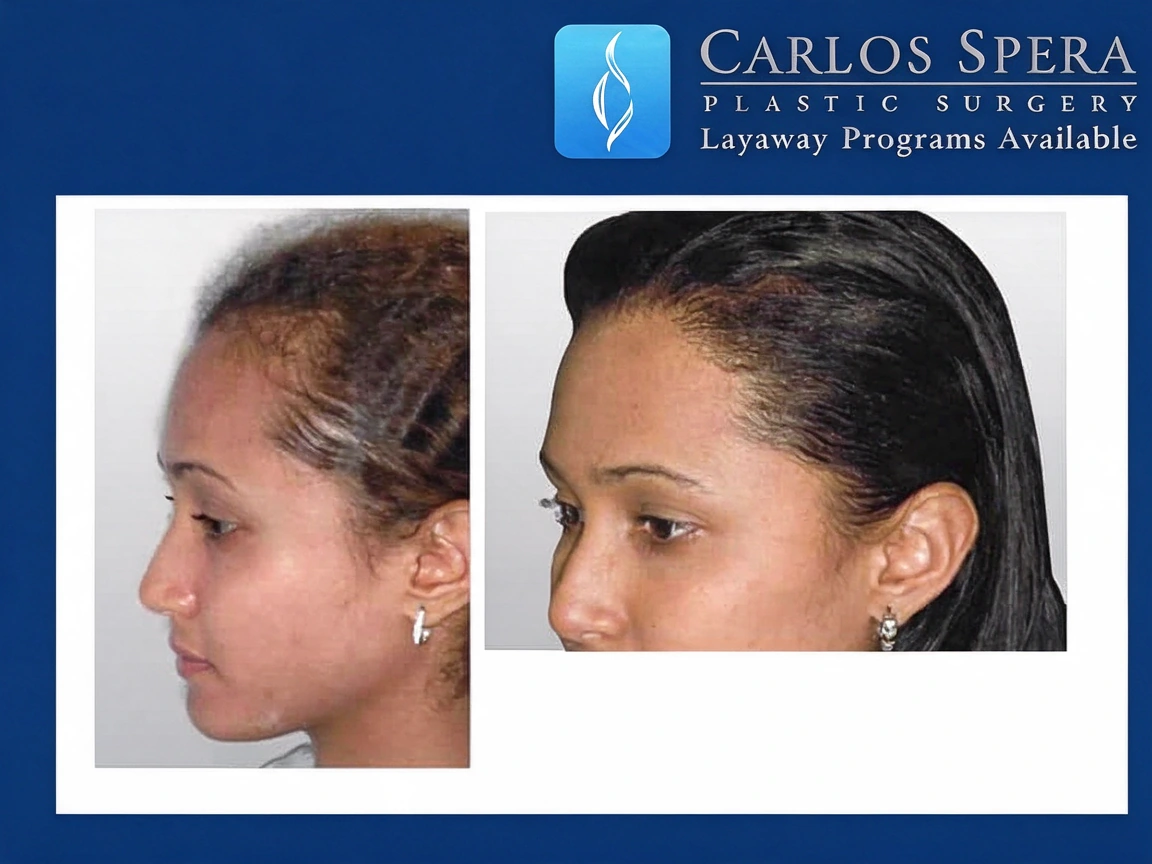
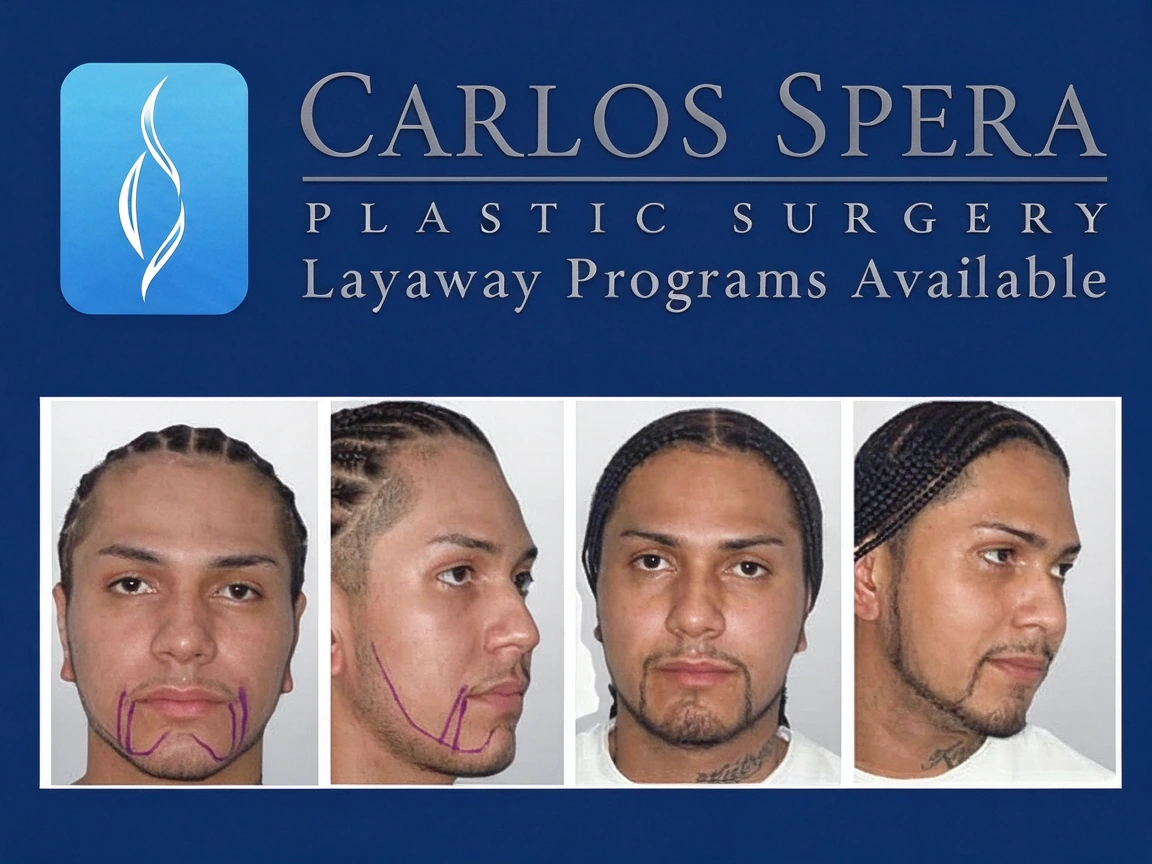
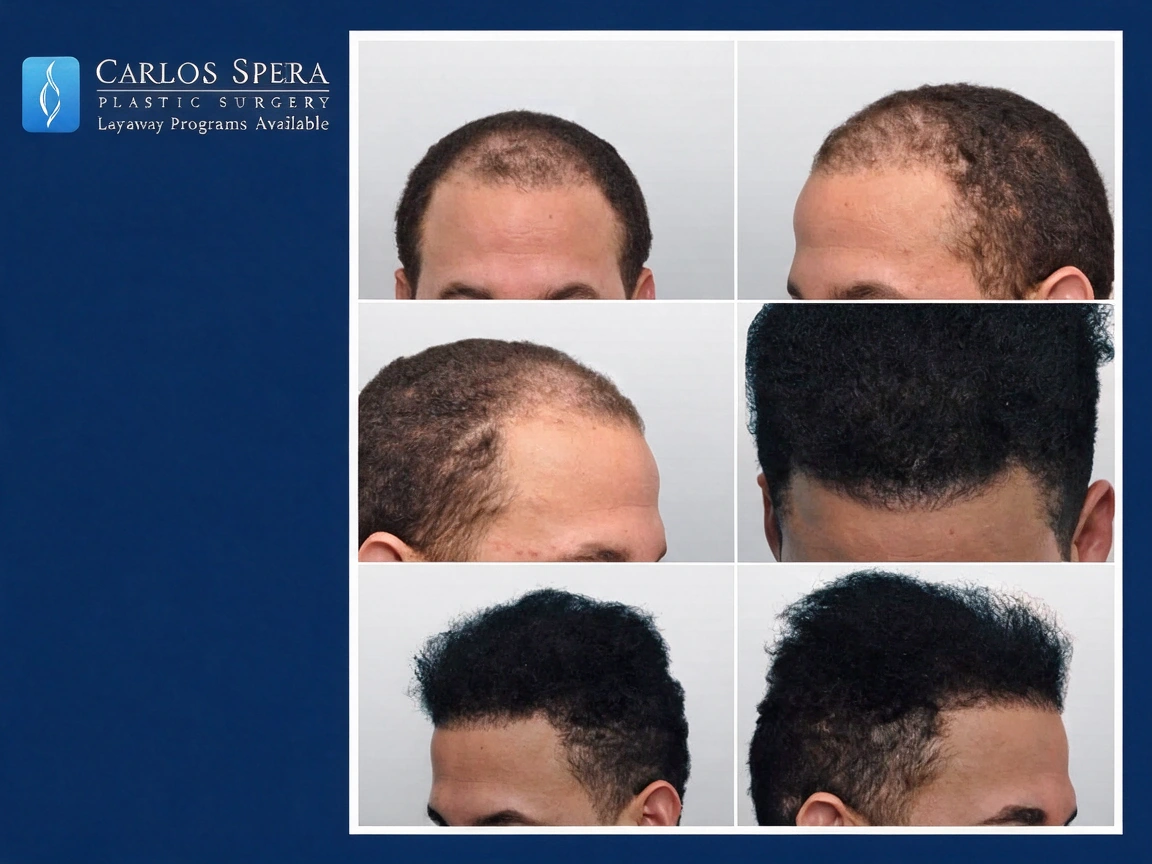
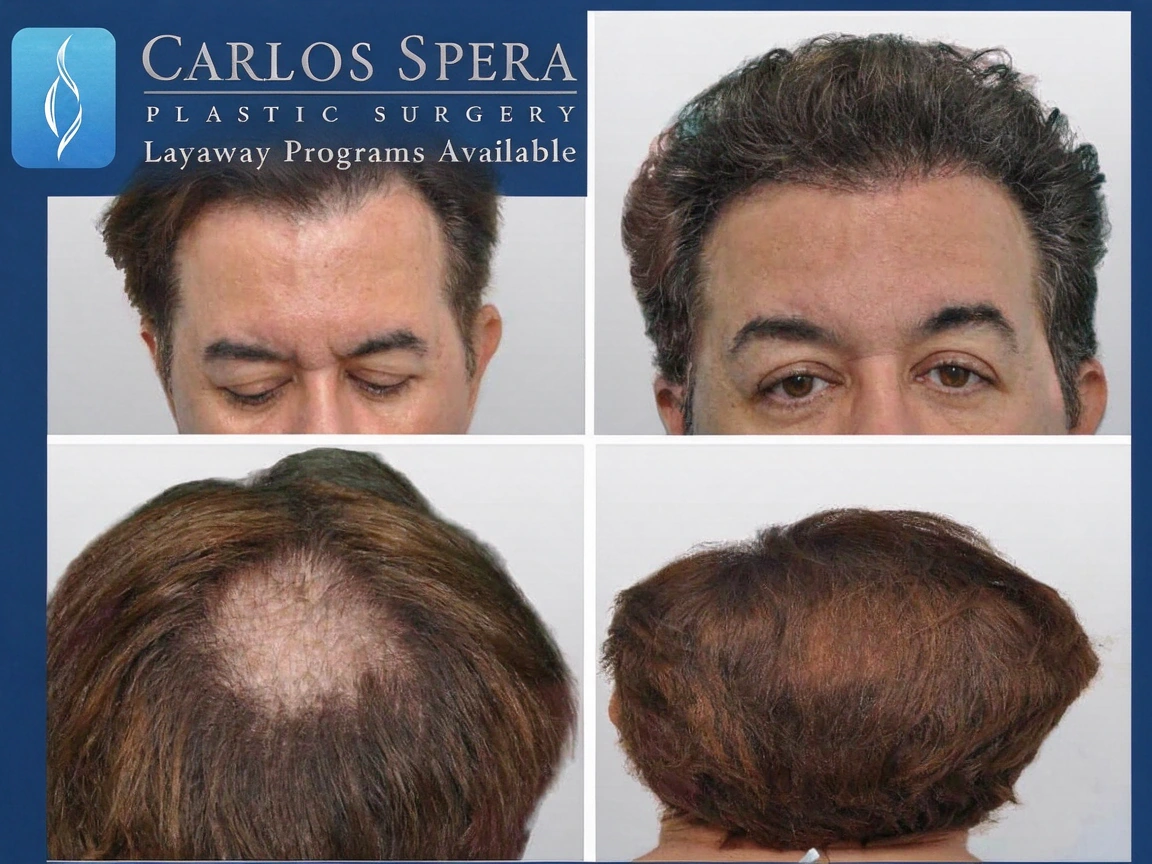
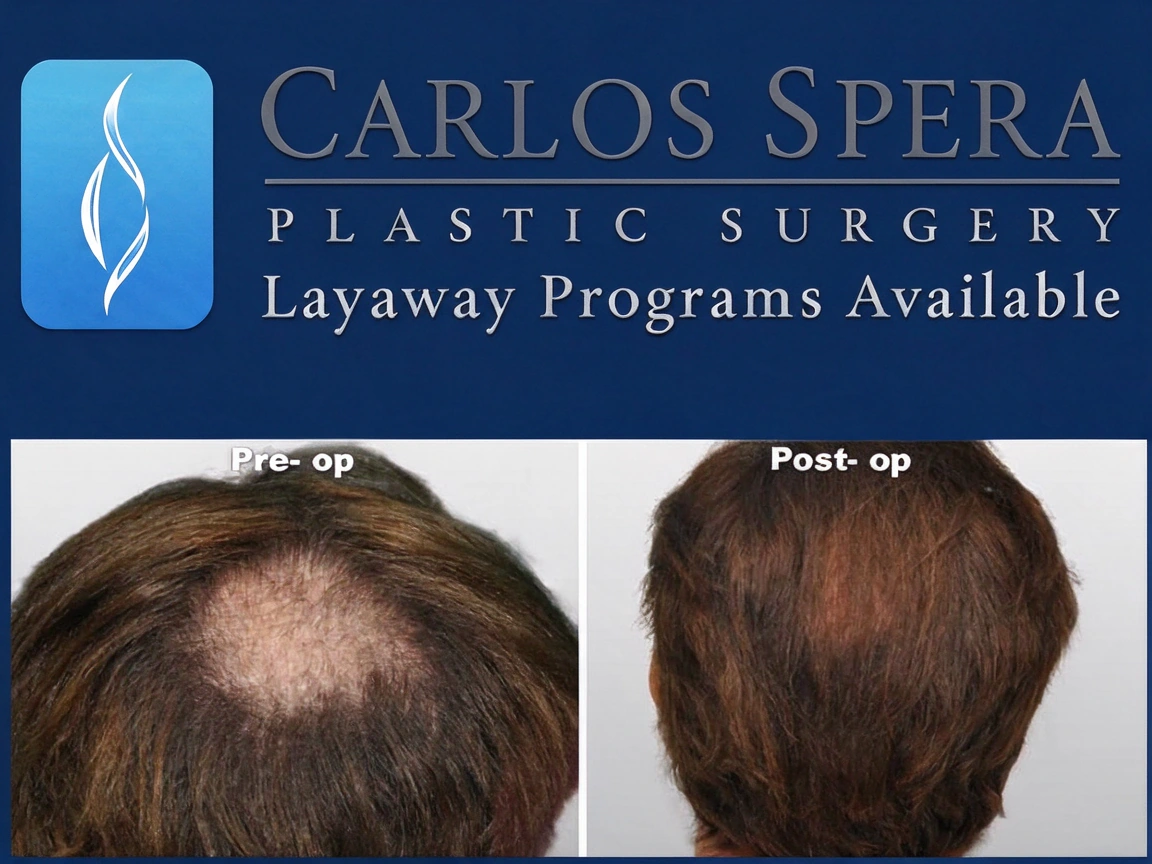
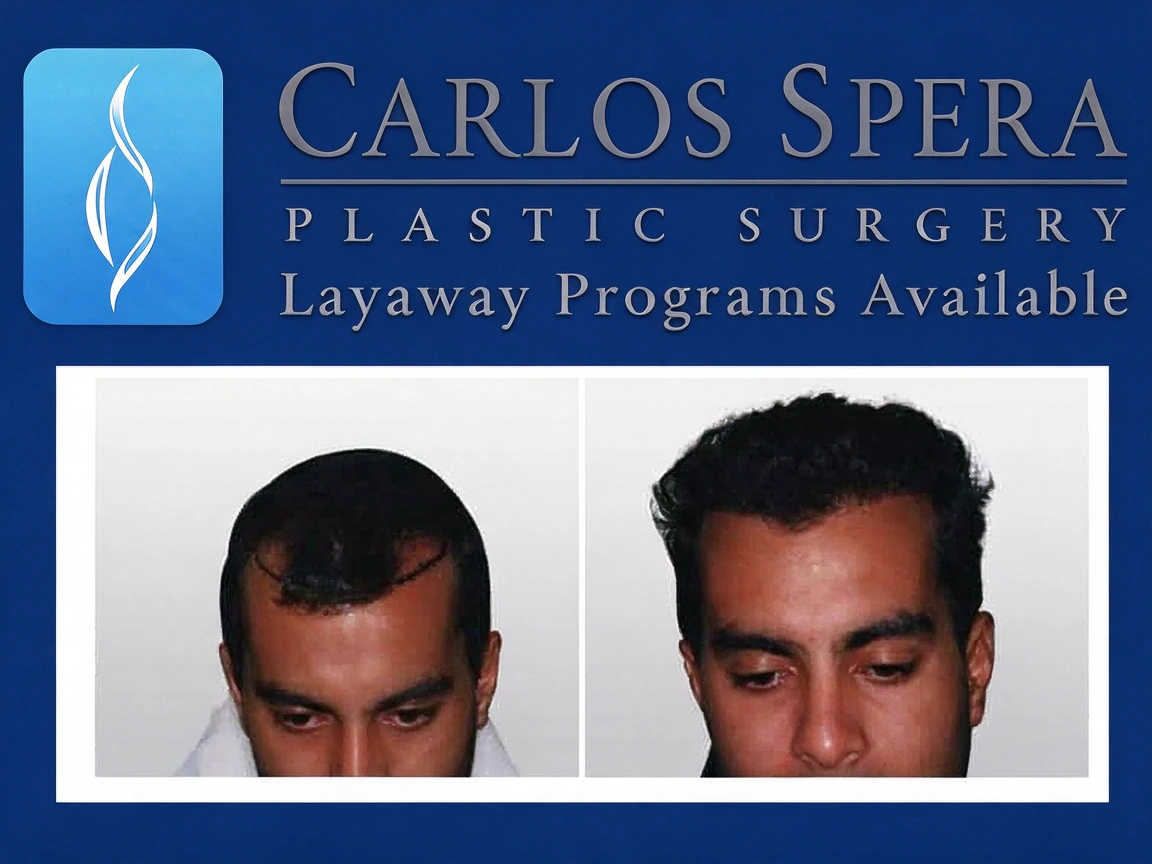
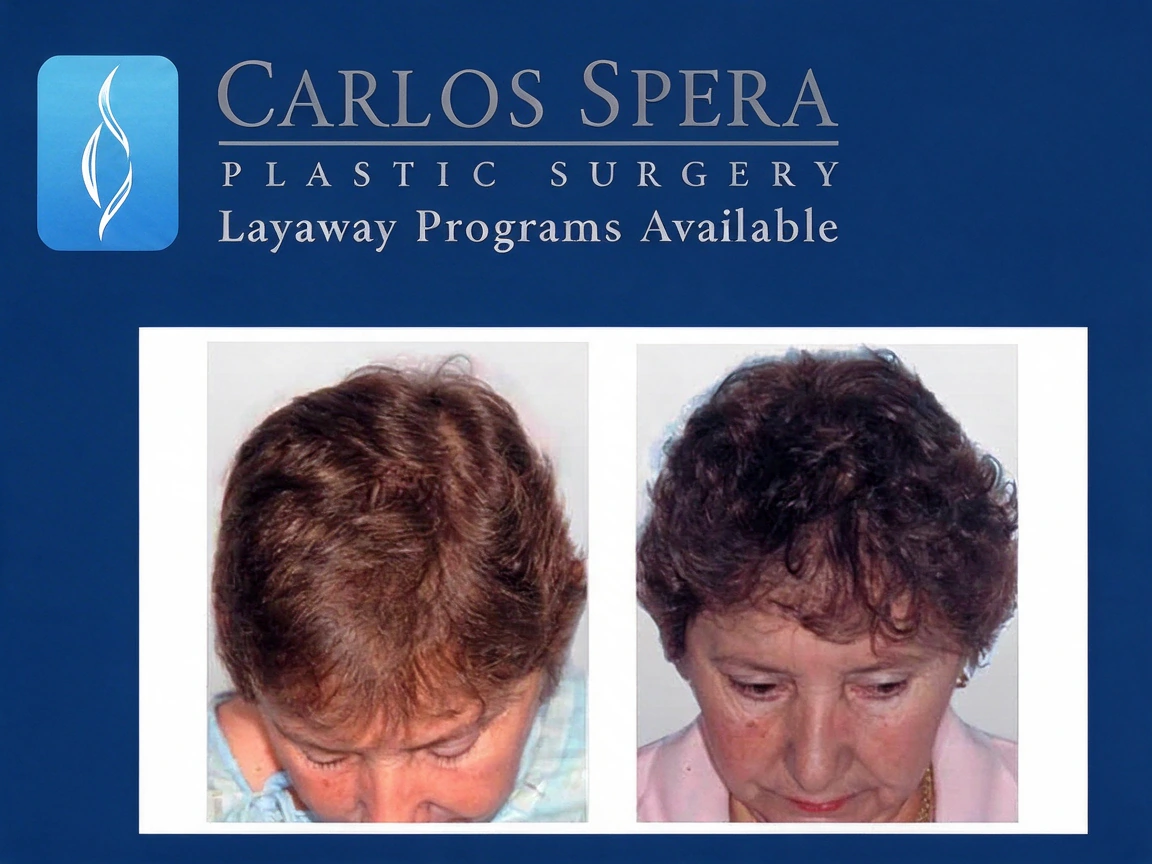
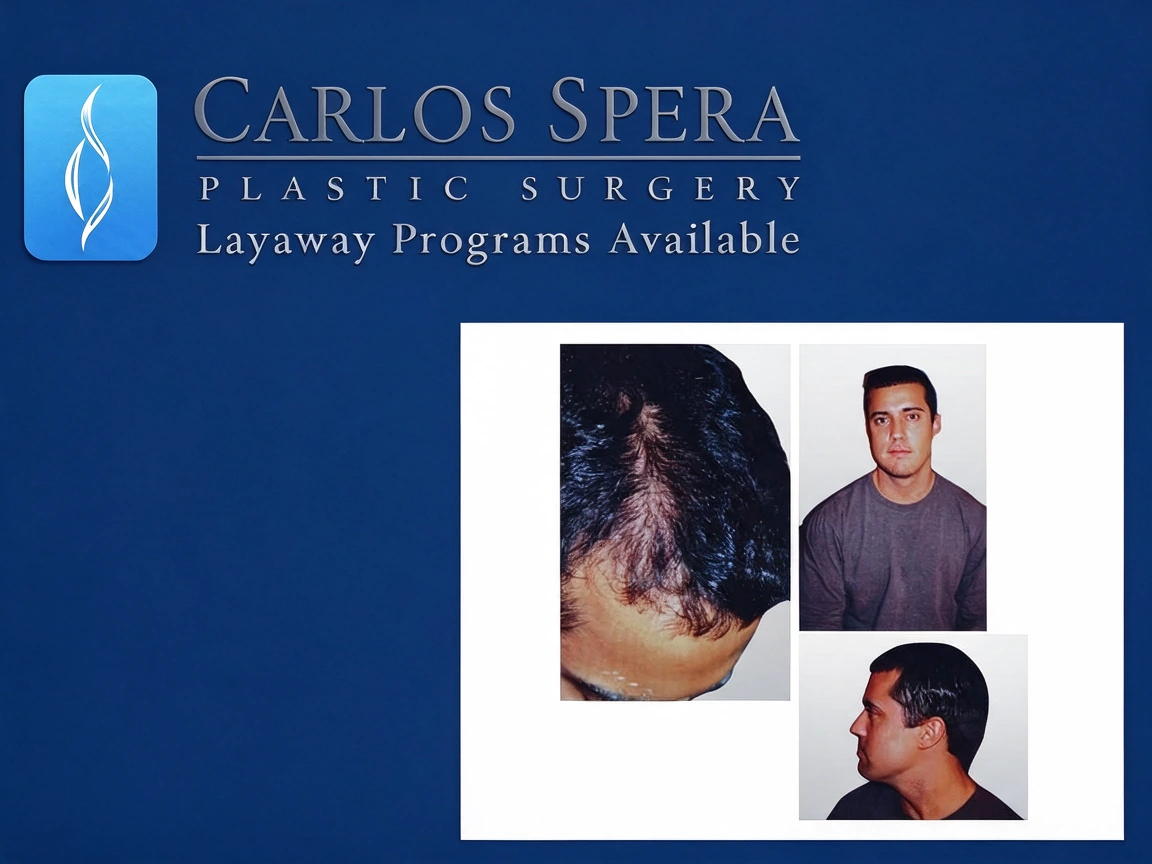
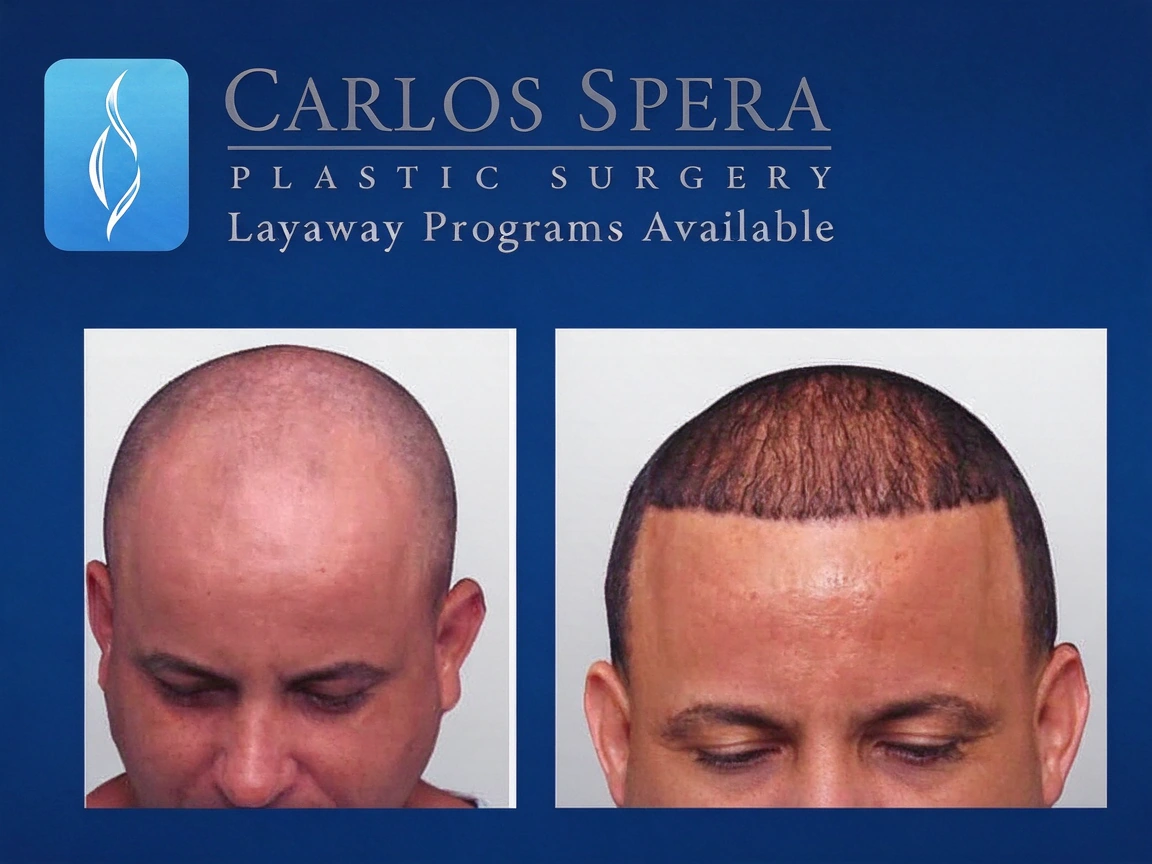
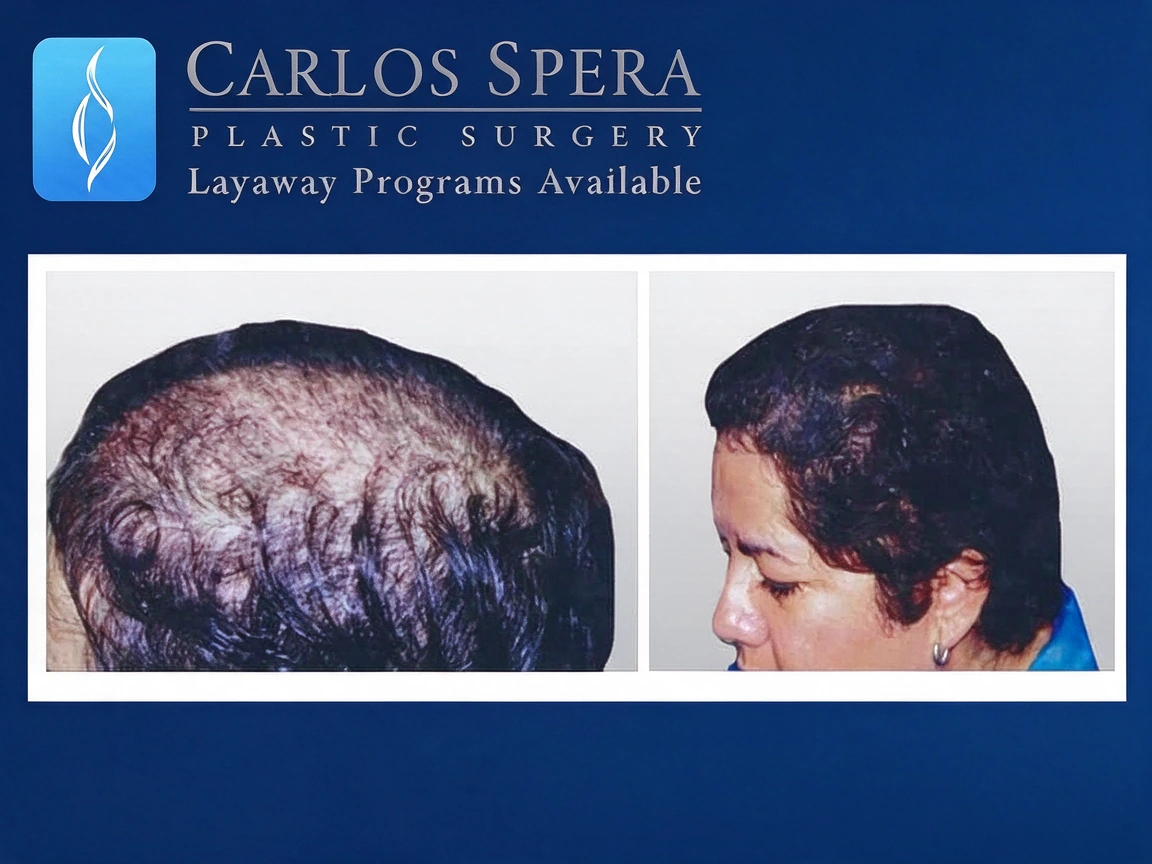
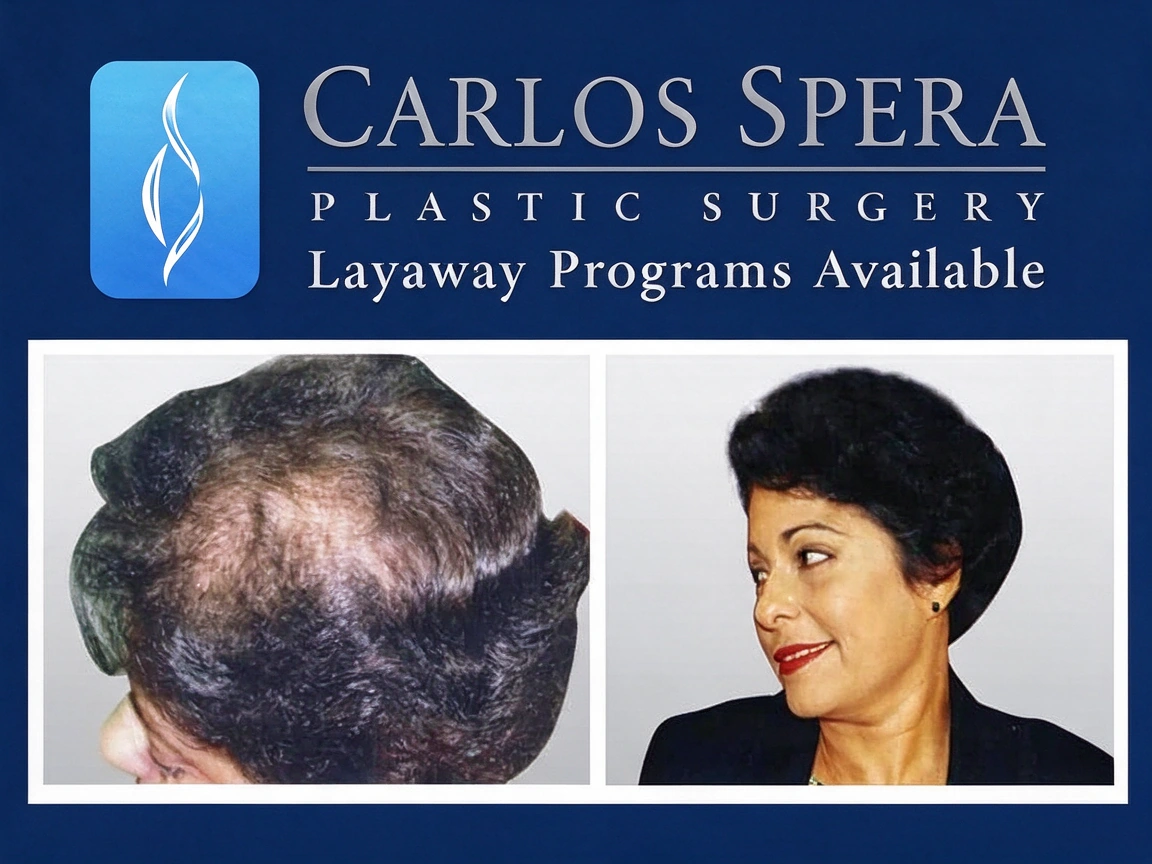
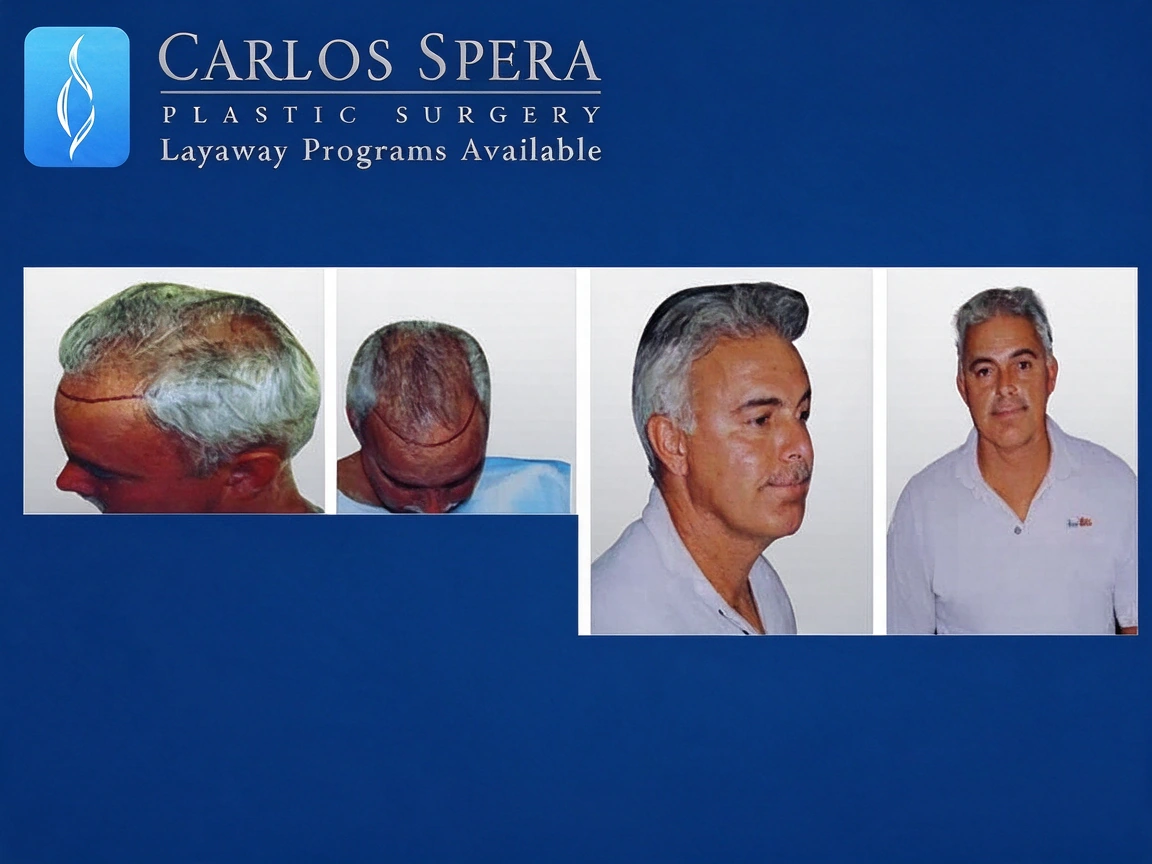
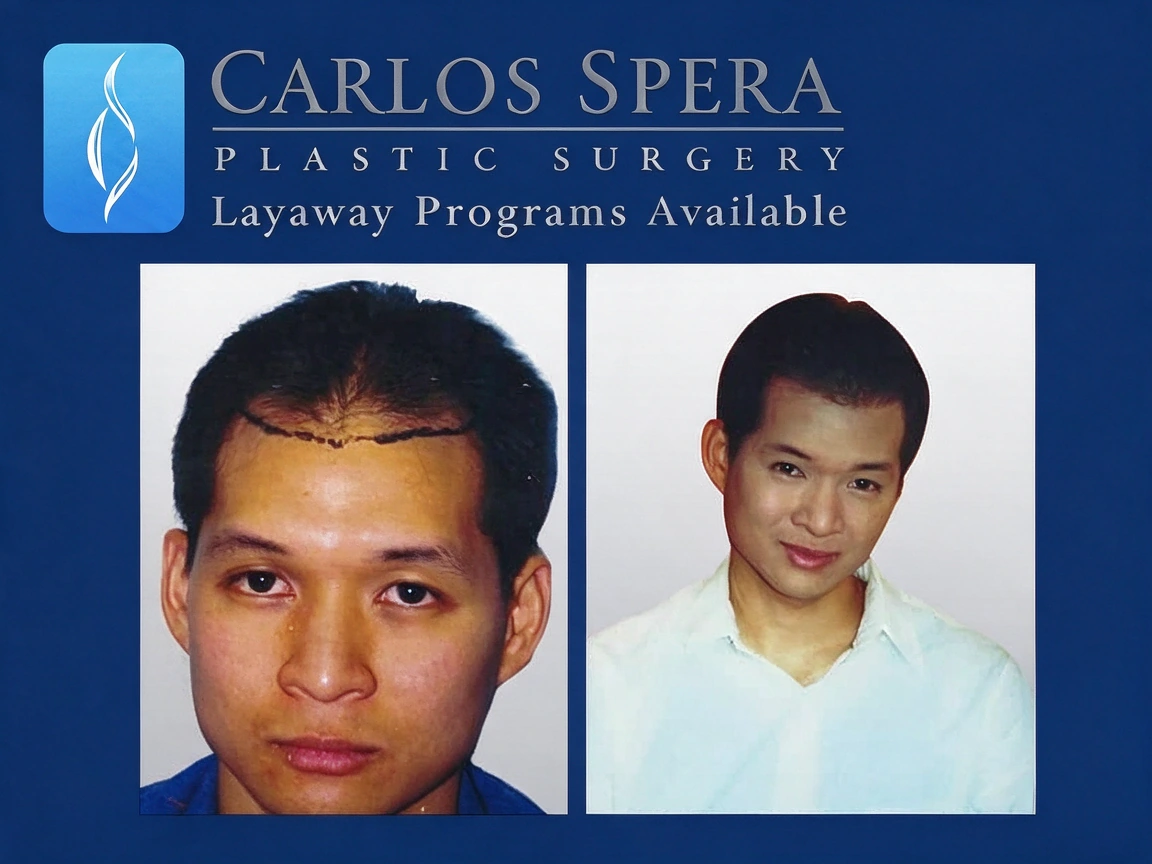
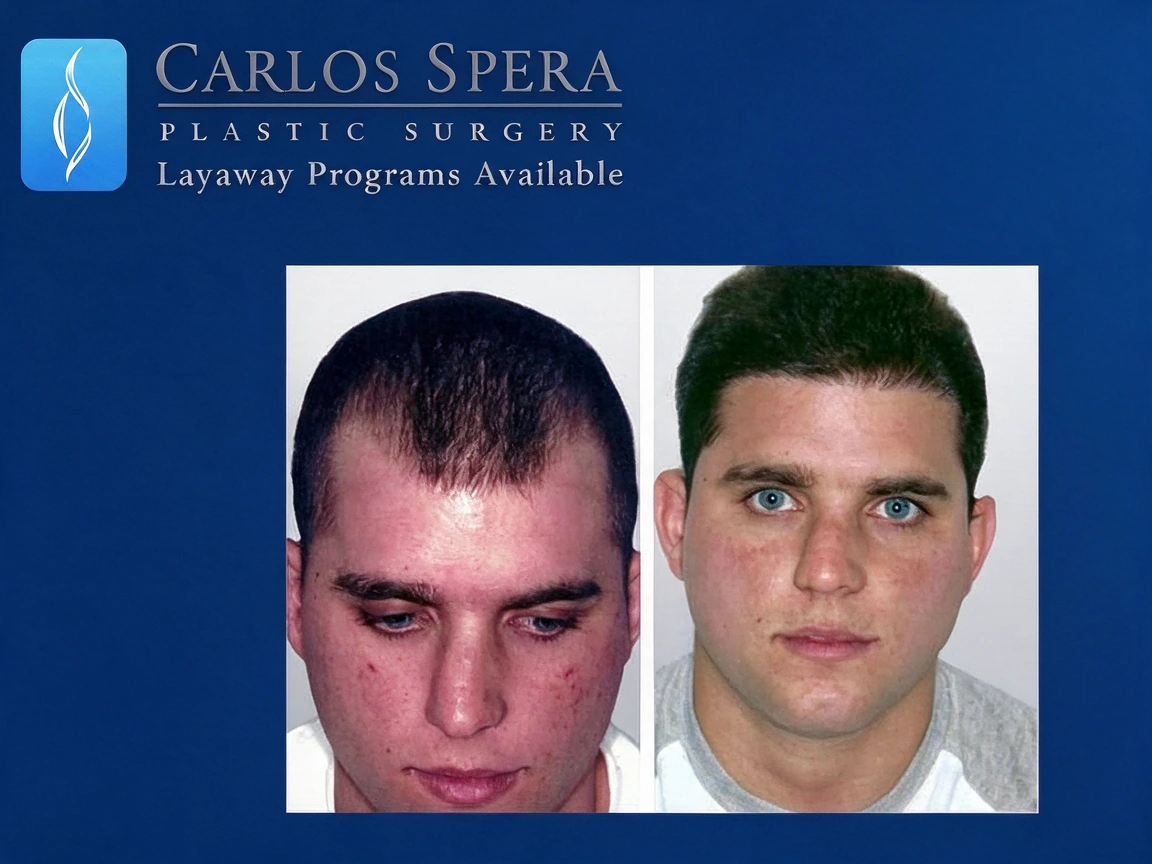
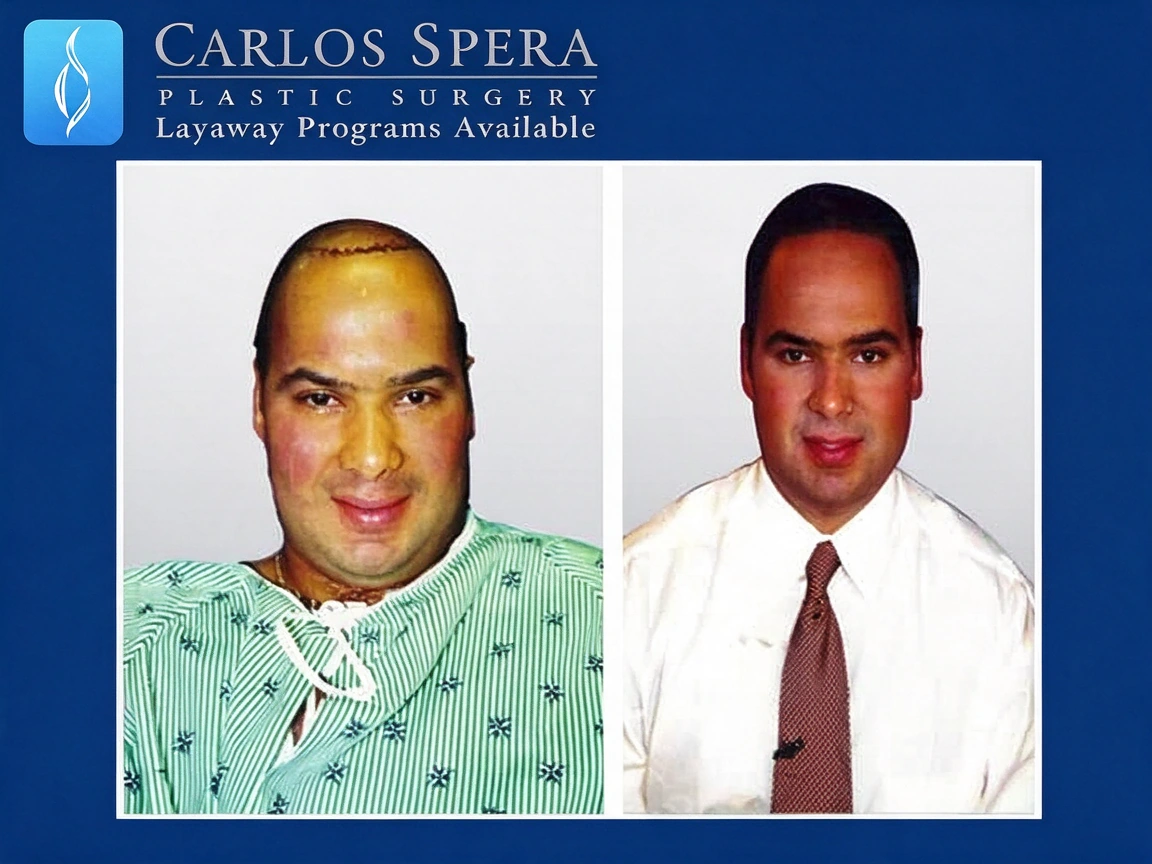
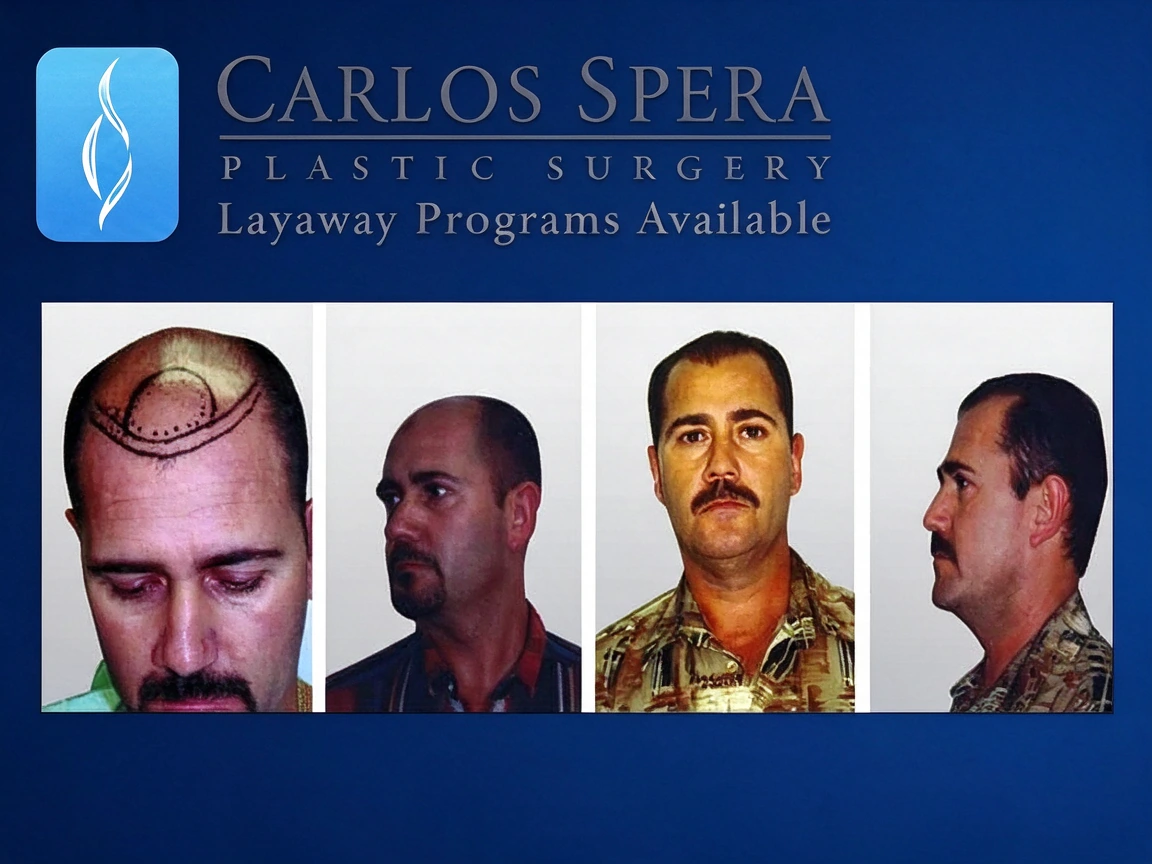
Before and Afters

Schedule Your Consultation
Dr. Spera

Please complete the form below to have a representative contact you promptly about our services.