


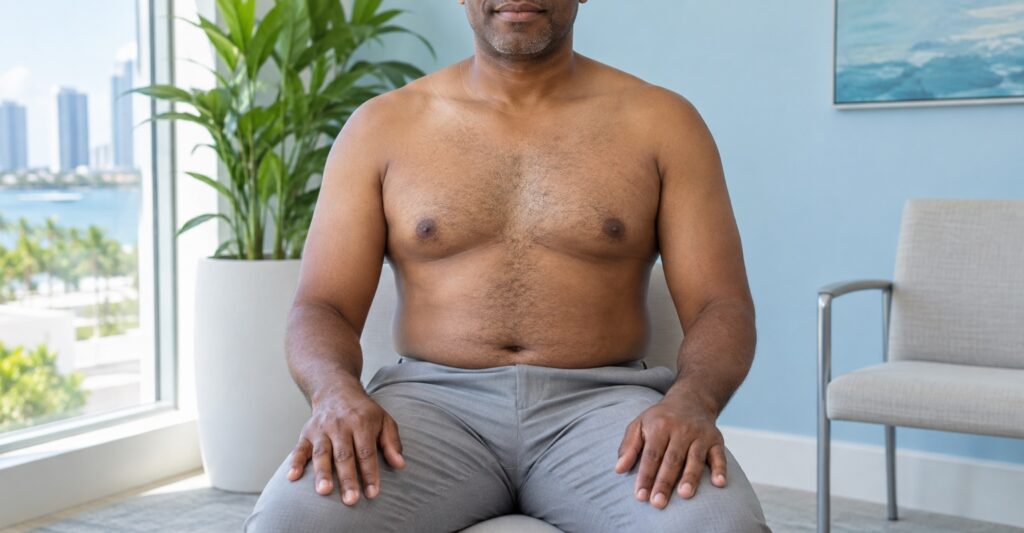
One breast looking larger than the other can prompt a search for gynecomastia in Miami. Gynecomastia can affect one side or both sides unevenly, but a photograph cannot confirm the cause. New or changing chest fullness deserves a medical assessment before it is treated as a cosmetic issue.
The purpose of a consultation is to identify what is causing the difference, decide whether further evaluation is needed, and discuss treatment only after that foundation is clear. The male breast reduction procedure page introduces surgical options for appropriate patients; it should not be used to self-diagnose a new lump.
Can gynecomastia happen on just one side?
Yes. Gynecomastia means enlargement of glandular breast tissue in a male chest, and the two sides do not always develop equally. Fat distribution, skin laxity, pectoral muscle shape, chest-wall anatomy, and posture can also contribute to an uneven appearance. More than one factor may be present.
A firmer area beneath the nipple is often discussed in descriptions of gynecomastia, but touch alone is not a reliable way to distinguish every benign change from another condition. Mayo Clinic's symptom guidance notes both uneven enlargement and findings that warrant a clinician's attention.
The word asymmetry describes a difference; it does not name its cause. That distinction matters because a plan aimed at removing fat would not answer an unresolved question about a breast lump, and gland removal would not necessarily correct an underlying chest-wall difference.
Findings that should be evaluated promptly
Arrange medical evaluation for a new firm or hard lump, nipple discharge, skin dimpling, nipple changes, rapidly increasing fullness, persistent pain, or enlarged lymph nodes. A change on only one side should not be dismissed because the other side looks normal. These findings do not automatically mean cancer, but they are not a reason to book cosmetic surgery without assessment.
If the area becomes acutely painful, hot, red, or associated with fever, seek prompt medical advice. If your concern is chest pain or difficulty breathing rather than a gradual contour change, seek emergency care. An online gallery or consultation request form is not an emergency service.
What to bring to the appointment
Write down when the difference first appeared, whether it is changing, whether there is tenderness, and whether weight changes or a new medication occurred around the same time. Bring prior breast imaging or pathology reports if you have them. If surgery has already been performed on the chest, bring the operative details when available.
Give the clinician a complete list of prescription medicines, over-the-counter products, supplements, hormones, and performance-enhancing substances. Include products purchased online, even if their packaging describes them as natural. Do not stop a prescribed medication or start a hormone treatment yourself to see whether the fullness changes.
It can help to separate your concerns into two lists: symptoms that need an explanation and appearance changes you would like to discuss. For example, tenderness and nipple discharge belong in the medical history; the way a shirt fits belongs in the goals discussion. Both deserve attention, but they answer different questions.
Will you need blood tests or imaging?
Not everyone needs the same tests. The clinician uses the history and examination to decide whether laboratory testing, breast imaging, or another specialist's assessment is appropriate. A suspicious finding may require tissue sampling. The purpose is to clarify the cause, not simply collect a standard package of tests before surgery.
Mayo Clinic's diagnosis and treatment overview describes this evaluation process and the importance of considering other causes of enlargement. Normal-looking skin, fitness, or young adult age does not by itself settle the diagnosis.
When surgery becomes a reasonable discussion
If evaluation confirms persistent gynecomastia and relevant medical causes have been addressed, surgical planning can focus on the actual tissue involved. Gland excision, liposuction, skin removal, or a combination may be considered. Our comparison of gland excision and liposuction explains why these methods serve different purposes.
One-sided fullness does not automatically mean only one side should be operated on. Conversely, it does not justify treating an otherwise satisfactory side by default. Ask the surgeon to explain the proposed plan for each side, what difference it is intended to reduce, and what asymmetry may remain.
The goal is an appropriate contour, not removing every bit of tissue regardless of the consequences. Excessive removal can leave a depression or an unnatural transition. Existing differences in ribs, muscles, nipple position, and skin can limit symmetry even when glandular fullness is improved.
Loose skin changes the conversation
If weight loss has left loose skin or a lower nipple position, tissue removal alone may not address the whole concern. The article on gynecomastia after major weight loss discusses the additional scar and skin-management questions. This is a different decision from confirming the cause of a new one-sided lump.
Ask where incisions would be placed, whether skin removal is anticipated, and how a difference between the two sides affects those choices. Request examples relevant to your anatomy when available, while remembering that another person's result cannot predict yours.
Understand recovery and the limits of correction
Early swelling can be uneven and can temporarily obscure the contour. Your surgeon should explain garment use, incision care, lifting and chest-exercise restrictions, and the timing of reassessment. Do not judge final symmetry during the first days of healing or respond to a sudden change with extra pressure or massage.
Potential complications include bleeding, infection, fluid collections, delayed healing, contour irregularity, persistent asymmetry, altered sensation, scarring, anesthesia complications, and the need for revision. The ASPS gynecomastia safety overview provides further risk information. Rapidly increasing one-sided swelling after an operation needs prompt contact with the surgical team.
To discuss persistent, evaluated chest enlargement, contact Dr. Carlos Spera's office. Bring your questions and any relevant medical findings. A responsible plan begins by understanding the difference between the two sides, then explains what treatment can and cannot change.