

Searching for BBL safety in Miami should begin with a clear premise: a Brazilian butt lift cannot be called safe or risk-free. Fat transfer to the buttocks carries recognized surgical risks, including the rare but potentially fatal complication of fat embolism. Real-time ultrasound, correct injection plane, careful patient selection, and strong perioperative systems are risk-reduction measures. They do not eliminate danger or guarantee an outcome.
What a BBL involves
A Brazilian butt lift generally combines liposuction with processing and reinjection of a patient's own fat into the buttock region. That means the risk profile includes both the areas where fat is removed and the areas where it is placed. Bleeding, infection, contour irregularity, fluid shifts, blood clots, anesthesia complications, fat necrosis, asymmetry, and need for revision are among the possible issues. The Brazilian butt lift procedure page describes the operation in more detail.
Fat embolism is a distinct concern. If fat enters injured vessels and reaches the lungs or circulation, the consequences can be catastrophic. This is why the depth and direction of the injection cannula matter. Marketing language, a large social-media following, or a low package price does not answer the technical and systems questions that affect risk.
Why the injection plane matters
The gluteal muscles contain large veins. Current risk-reduction principles emphasize keeping injected fat in the subcutaneous space above the fascia overlying the muscle, rather than placing it within or beneath the muscle. The cannula tip must remain in the intended plane during injection. External observation alone cannot always show where the tip is under the skin.
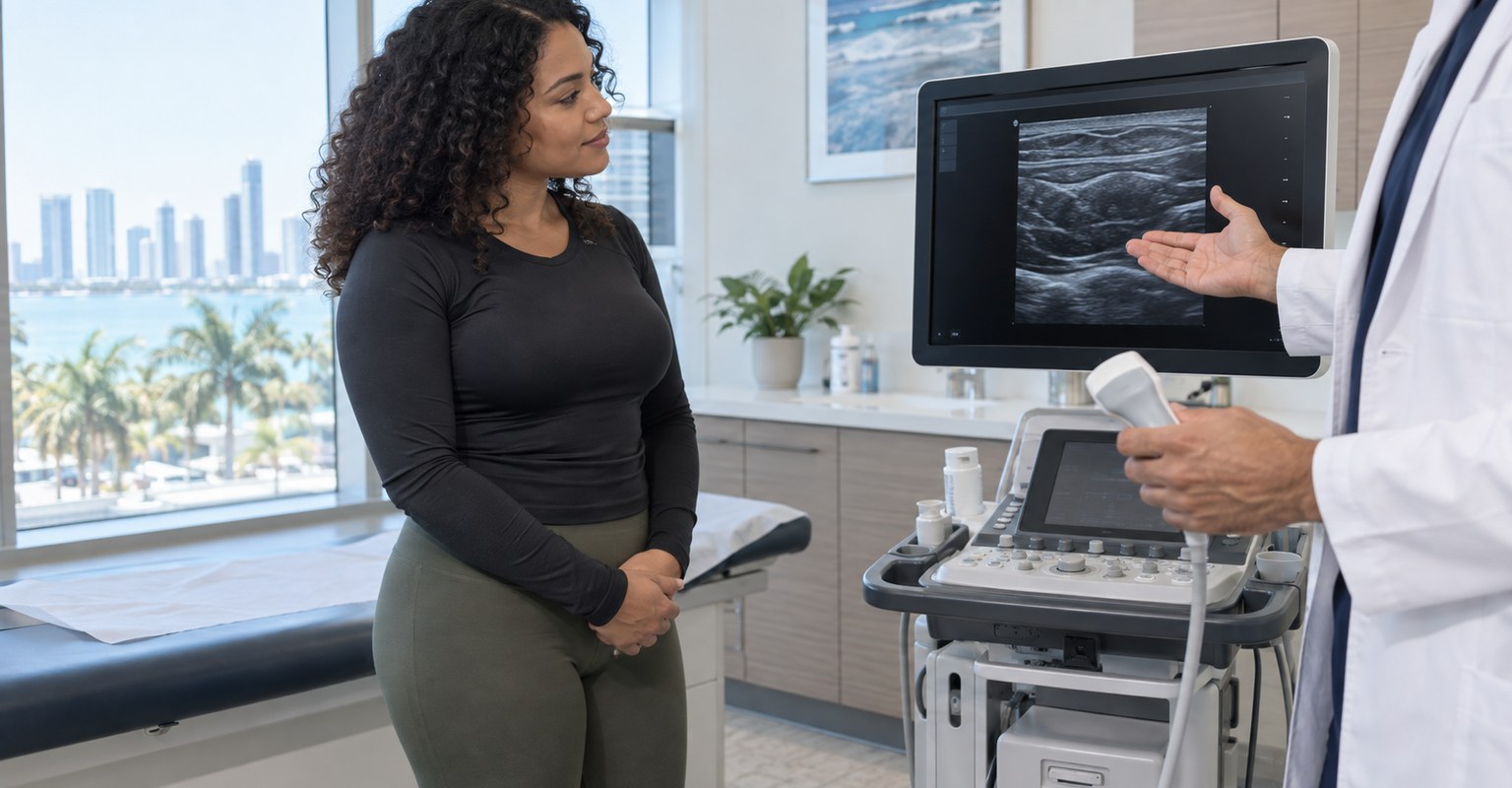
Real-time ultrasound allows the operating physician to visualize relevant tissue layers and the cannula as fat is injected. It adds information that tactile feel and surface landmarks cannot provide. Ultrasound is therefore an important safeguard, but it is not a shield against every complication. Image quality, equipment, training, continuous use during injection, and the surgeon's response to what is seen all matter.
What current Florida office-surgery law requires
As of this article's publication, Florida Statutes sections 458.328 and 459.0138 set specific requirements for physicians performing gluteal fat grafting in an office-surgery setting. These laws require an in-person examination by the physician performing the procedure no later than the day before surgery. They also require that physician to perform the fat extraction and fat injection and prohibit delegating those portions.
The law also requires fat to be injected only into the subcutaneous space and not to cross the fascia overlying the gluteal muscle. During placement and navigation of the cannula while fat is injected, the physician must use ultrasound guidance or another technology authorized by rule that provides equal or better information. The laws further require a one-physician-to-one-patient ratio at all times during every phase of the procedure, beginning with administration of anesthesia and ending with extubation. Once a physician has begun and is engaged in a gluteal fat grafting procedure, the physician may not simultaneously begin or perform another procedure on another patient.
Laws and agency rules can change, and requirements may differ by facility type. Patients should verify the current text with the Florida Board of Medicine and ask how it applies to the proposed surgical setting. These legal standards are reported for education; this article does not represent that any named physician or facility satisfies them. Compliance should be confirmed directly with current records and the relevant regulators.
Questions about ultrasound should be specific
- Will real-time ultrasound be used during every moment of cannula placement and navigation while fat is being injected?
- Who operates and interprets the ultrasound, and what training have they completed?
- Can the surgeon explain how the subcutaneous plane is identified on the image?
- How are images or video documented, retained, and connected to the patient record?
- What is the plan if the tissue plane cannot be visualized clearly?
- Is the ultrasound equipment available, functional, and positioned before anesthesia begins?
A yes-or-no answer about owning an ultrasound machine is not enough. The purpose is real-time guidance of the injection cannula, not a scan performed only before or after fat placement. Patients do not need to become ultrasound experts, but they can ask for a plain-language explanation.
Evaluate the entire surgical system
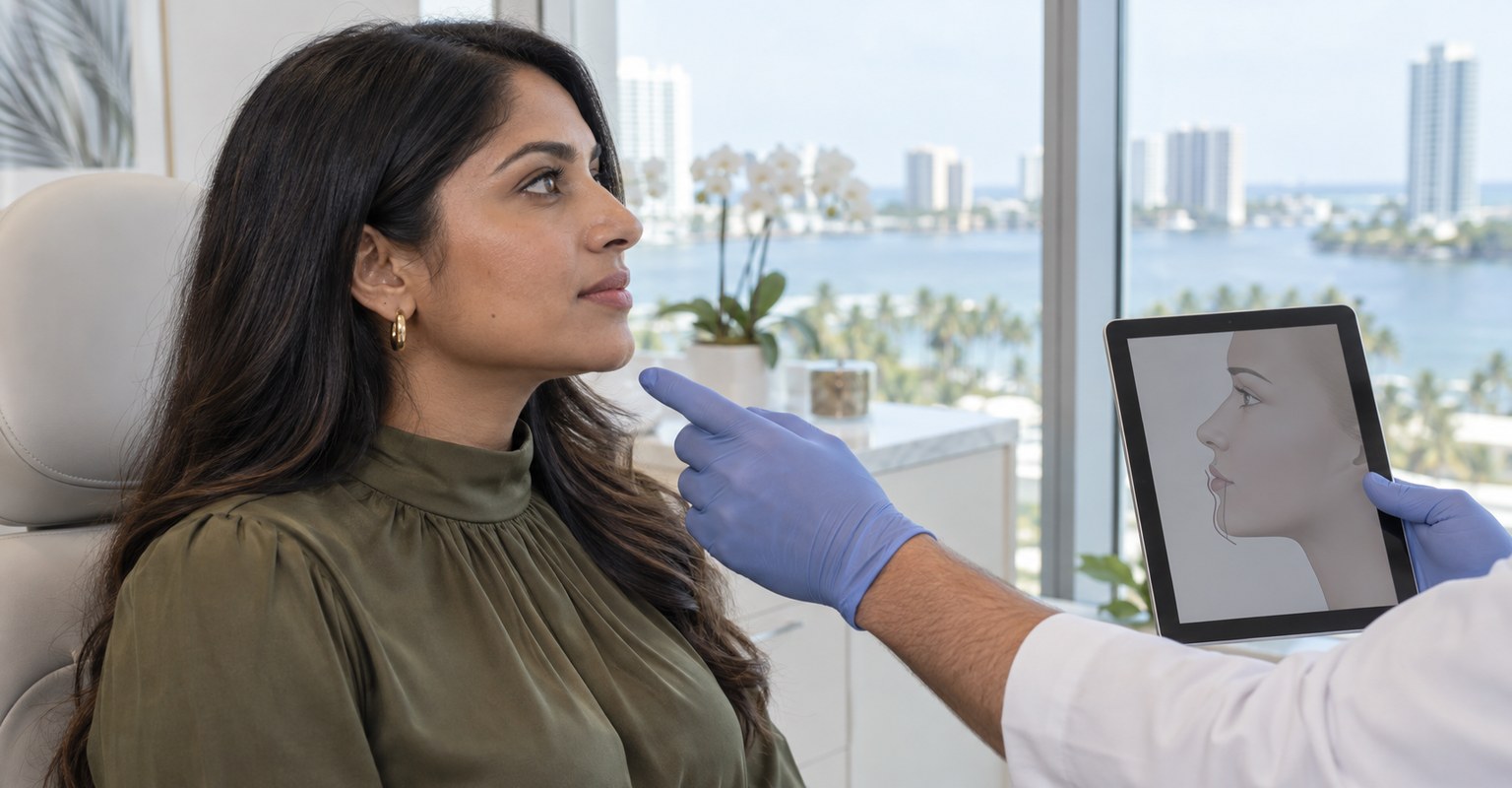
Risk reduction extends beyond one device. Ask whether the surgeon is board certified in plastic surgery by an appropriate board, where the procedure will occur, how the facility is licensed or accredited, and who provides anesthesia. Verify credentials independently. Ask about emergency medications and equipment, transfer protocols, hospital relationships, and who remains responsible after discharge.
Volume and speed deserve scrutiny. A patient should understand how many operations the surgeon performs that day, whether cases overlap, and who monitors them throughout anesthesia and recovery. Current Florida requirements should be discussed directly rather than inferred from advertising. An office tour or coordinator's reassurance is not a substitute for documentation.
Liposuction planning is part of BBL planning
Fat must first be removed, commonly from the abdomen, flanks, back, or other selected zones. The amount that can be harvested is limited by anatomy, health, applicable standards, and the need to avoid excessive contour damage or physiologic stress. More fat is not automatically better. Review the separate liposuction in Miami guide for questions about donor areas and contour goals.
Not all transferred fat survives, and retention is variable. Some volume loss is expected as the body heals. No responsible consultation can guarantee a particular survival percentage, final measurement, or symmetry. Chasing an extreme size may increase demands on donor sites and create unrealistic pressure on technique. A proportionate goal and a conservative plan are meaningful parts of informed consent.
Patient-specific factors can change risk
A complete assessment should address cardiovascular and lung health, anemia, diabetes, clotting history, prior operations, medications and supplements, nicotine exposure, body-mass considerations, pregnancy possibility, and support at home. Patients should disclose recreational substances and weight-loss medications. They should not stop prescribed medicines without instructions from the qualified clinicians managing them.
Some patients may not be candidates, or surgery may need to be postponed for medical optimization. Combining multiple procedures can lengthen anesthesia and change blood-loss, fluid, mobility, and clot risks. The choice to combine operations should be individualized rather than treated as a package deal. The body procedures hub can help patients understand which goals belong to separate operations.
Recovery planning is a clinical issue
Postoperative instructions may limit prolonged pressure on the grafted area and specify positioning, garments, walking, wound care, hydration, and return to activity. Details vary, so generic social-media advice should not override the treating team's instructions. Excessive immobilization can be harmful, while premature strenuous activity can also create problems. Patients need a written plan and a responsible adult for the initial recovery period.
Miami patients traveling from elsewhere should plan for follow-up before booking flights or hotels. Ask how long to remain locally, who will evaluate a concern after hours, and where to go in an emergency. Long travel can add immobility, and a complication should not be managed solely through text messages or photographs.
Warning signs that need urgent attention
Emergency symptoms after surgery can include shortness of breath, chest pain, fainting, confusion, a rapid heartbeat, coughing blood, sudden weakness, or severe deterioration. These warrant emergency services, not a routine office message. Increasing one-sided leg swelling, uncontrolled bleeding, fever, spreading redness, pus, or escalating pain also requires prompt medical direction. The surgical team should provide its own emergency list and contact pathway.
A consultation checklist
- Who performs the examination, liposuction, and every fat-injection step?
- How is real-time ultrasound used and documented during injection?
- What anatomical plane will receive fat, and what actions prevent crossing the fascia?
- What credentials and current status can I verify for the surgeon and facility?
- Who provides anesthesia and monitors me from induction through recovery?
- What is the emergency transfer plan, and which hospital would receive me?
- How do my health history and planned procedure combination change risk?
- Who sees me after surgery, including nights, weekends, and after I travel home?
Use safety language accurately
Ultrasound guidance and Florida's office-surgery standards respond to known hazards; they do not make BBL harmless. The right question is whether a qualified surgical team applies current safeguards, screens candidacy carefully, uses an appropriate setting, explains alternatives, and supports the patient through recovery. Even when every precaution is followed, serious complications remain possible.
To discuss individual goals and risks related to BBL safety in Miami, request a consultation. This content is general education, not medical or legal advice, and it does not verify regulatory compliance by any physician or facility. Confirm current requirements and make decisions only after an individualized medical evaluation.