


The search for septoplasty vs rhinoplasty in Miami usually begins with a simple question: is the goal to breathe better, change appearance, or both? Septoplasty primarily treats the internal septum, while rhinoplasty reshapes the external and structural framework of the nose. Those categories overlap, but they are not interchangeable. A careful nasal examination is needed because obstruction can come from several structures, and an appearance concern may affect the same support mechanisms that keep the airway open.
What septoplasty is designed to change
The septum is the wall of cartilage and bone dividing the nasal passages. When it is significantly deviated, narrowed airflow on one or both sides may contribute to congestion, mouth breathing, exercise difficulty, or sleep-related symptoms. Septoplasty repositions, trims, or reinforces selected portions of the septum while preserving enough support for the nose.
Septoplasty is generally considered functional surgery. It is not intended to refine a hump, rotate the tip, or deliberately change the visible width of the nose. Subtle external change can still occur because the septum supports the nasal framework, and correction of a severely bent septum may influence alignment. The septoplasty in Miami page provides more procedure-specific context.
What rhinoplasty is designed to change
Rhinoplasty modifies nasal bone, cartilage, soft-tissue relationships, or some combination of them. Goals may include adjusting a bridge hump, tip shape, projection, rotation, width, asymmetry, or post-traumatic deformity. Functional rhinoplasty techniques may also strengthen the nasal valves or repair structural collapse. Rhinoplasty is therefore not always cosmetic, and cosmetic changes can have functional consequences.
Every alteration must be considered in three dimensions. Narrowing a nose without preserving adequate support may compromise airflow; adding support for a weak valve can subtly affect appearance. The rhinoplasty procedure guide explains common goals, but the proposed maneuvers should be tied to a patient's actual anatomy.
Breathing problems are not always a deviated septum
Nasal obstruction can also involve enlarged turbinates, internal or external nasal valve narrowing, allergy, chronic rhinitis, sinus disease, polyps, scar tissue, or dynamic collapse during inspiration. Symptoms may change with seasons, exercise, sleep position, or decongestant use. A septoplasty alone will not correct every source of blockage.
Evaluation may include history, direct examination, response to support maneuvers, and sometimes nasal endoscopy or imaging when clinically indicated. A surgeon should explain which finding corresponds to each symptom and whether an ear, nose, and throat evaluation or allergy management is appropriate. Patients should be cautious about promises that septoplasty will cure snoring, sleep apnea, headaches, or recurrent sinus problems without a confirmed link.
When septoplasty and rhinoplasty are combined
Combined septorhinoplasty may be considered when internal deviation and external shape or support need correction in the same operation. Examples include a crooked nose after trauma, a deviated septum paired with nasal valve collapse, or a cosmetic plan that requires septal cartilage for grafting. One operation can coordinate functional and aesthetic goals, but it may also be more complex than either procedure alone.
A combined plan should name the functional maneuvers and cosmetic maneuvers separately. Patients should understand where graft material may come from, how support will be maintained, and which changes are medically necessary versus elective. In some cases, cartilage from the ear or rib may be discussed if septal cartilage is unavailable or insufficient. That adds donor-site considerations and should never be assumed from a generic description.
Open, closed, and ultrasonic approaches
Open rhinoplasty uses a small external incision between the nostrils in addition to internal incisions, allowing broad exposure of the framework. Closed rhinoplasty works through internal incisions. Neither is inherently superior for every patient. Anatomy, planned maneuvers, revision history, and surgeon experience guide the choice.
Ultrasonic instruments may be used for selected bone work, offering powered, precise treatment of bony structures. They do not replace cartilage shaping, septal correction, grafting, or soft-tissue judgment. A procedure marketed as ultrasonic rhinoplasty can still involve swelling, bruising, risk, and a long refinement period. The ultrasonic rhinoplasty overview can help frame questions about when that tool is relevant.
How goals should be documented
Useful consultation language is specific. Instead of asking for a smaller nose, identify whether the concern is bridge height, tip width, projection, rotation, nostril shape, or crookedness. For function, describe which side feels blocked, when symptoms worsen, past trauma, prior surgery, medication use, and whether pulling the cheek outward changes airflow.
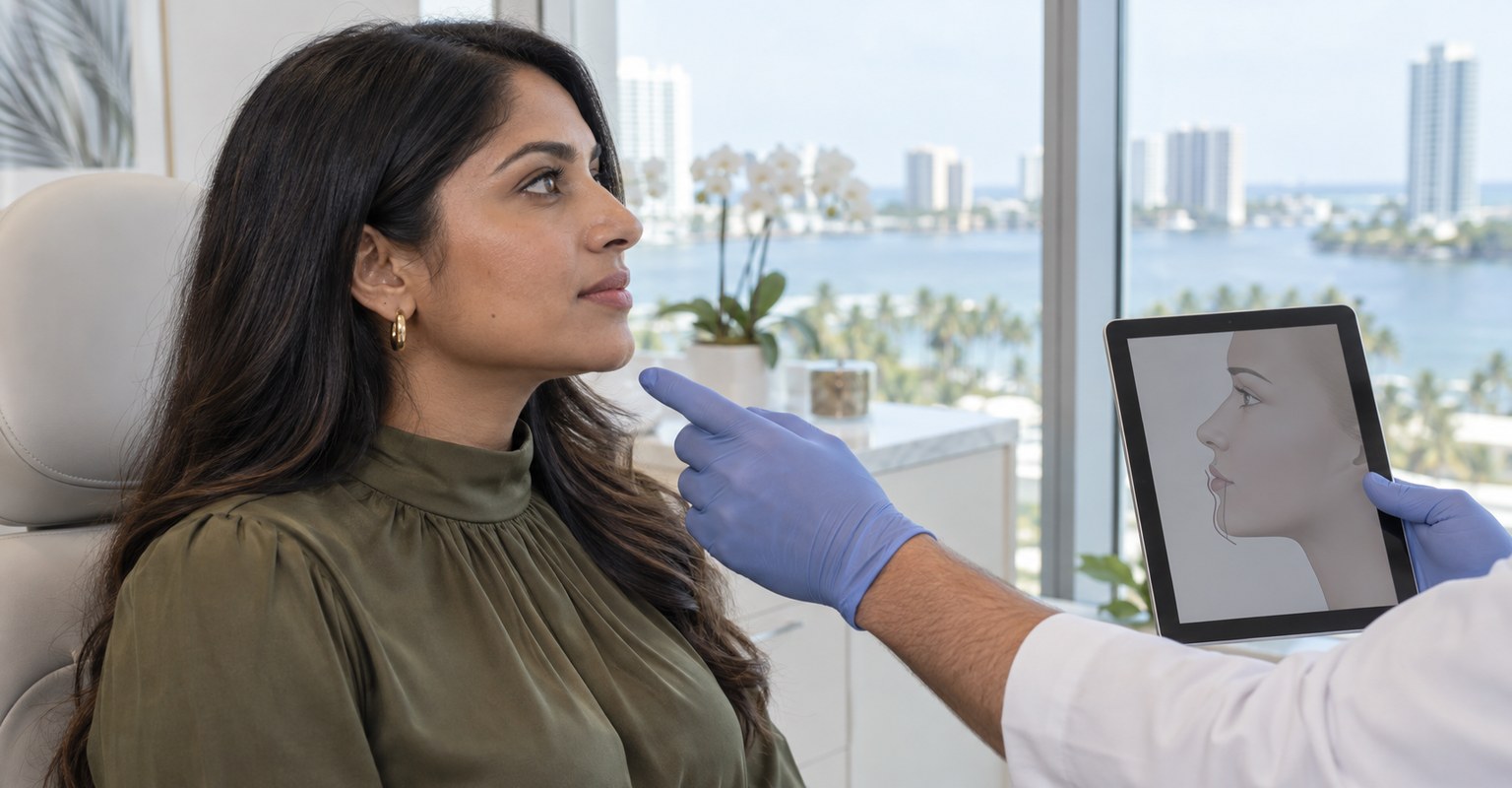
Standardized photographs and computer imaging may help communication, but an image is not a contract or a guaranteed result. Skin thickness, cartilage strength, scar response, and healing all influence the outcome. The aim should be a shared surgical plan with realistic ranges and acknowledged tradeoffs.
Recovery differs by the work performed
Septoplasty recovery may involve internal swelling, congestion, drainage, tenderness, and temporary reduction in airflow before improvement. Splints or packing are sometimes used, though protocols vary. Rhinoplasty commonly adds external swelling and bruising, particularly when bone work is performed. A splint may be worn during the early period.
Many people return to nonstrenuous routines within roughly one to two weeks, but visible swelling can persist and the nasal tip may refine over many months. Final assessment after rhinoplasty often takes a year or longer, especially in thicker skin or revision cases. These are general patterns, not promised timelines. Travel, contact sports, glasses, nose blowing, and exercise need surgeon-specific clearance.
Risks to discuss for each operation
Both procedures can involve bleeding, infection, anesthesia complications, numbness, altered smell, persistent obstruction, scarring, asymmetry, and need for revision. Septoplasty-specific concerns can include a septal perforation, collection of blood within the septum, change in support, or an unwanted external change. Rhinoplasty can produce contour irregularities, dissatisfaction, valve compromise, graft visibility or movement, and prolonged swelling.
Improved breathing cannot be guaranteed because symptoms may have multiple causes and scar tissue can form. Perfect symmetry is not biologically realistic. Revision surgery is sometimes considered only after adequate healing, and it may be more difficult because anatomy and blood supply have changed.
Primary and revision planning differ
Previous septoplasty or rhinoplasty changes the map. Cartilage may already have been removed, scar tissue can obscure normal planes, and skin may not redrape as predictably. Patients should bring old operative reports and photographs when available and disclose prior injections, trauma, nasal cautery, and breathing procedures. A revision consultation may require additional graft material and a more conservative expectation. It should also distinguish a correctable structural problem from normal asymmetry or swelling that still needs time to settle.
Objective measurements and examination findings help define the plan, but breathing remains partly subjective and can fluctuate with inflammation. A surgeon may recommend medical treatment before surgery to see how much obstruction is reversible without an operation. If symptoms persist after healing, reassessment should consider the septum, turbinates, valves, scar tissue, and nonstructural causes instead of assuming that another operation is the automatic answer. Waiting for adequate healing before judging form or airflow can prevent premature revision decisions.
Insurance and documentation
Insurance may cover medically necessary functional treatment when plan criteria, examination findings, symptoms, and prior conservative care meet specific requirements. Cosmetic changes are generally excluded. A combined operation may therefore contain covered and self-pay components. Coverage, authorization, deductible, facility, anesthesia, and surgeon-network status must be confirmed with the insurer and practice. No blog or surgeon can guarantee payment.
Questions for a nasal surgery consultation
- Which structures are causing my obstruction: septum, turbinates, valves, inflammation, or something else?
- Which proposed steps are functional, and which are cosmetic?
- Could my appearance change after septoplasty alone?
- How will rhinoplasty preserve or improve structural support and airflow?
- Will grafts be needed, and what is the possible donor source?
- Why is an open, closed, traditional, or ultrasonic approach appropriate in my case?
- What recovery range and long-term swelling pattern should I expect?
- What might require revision, and when could that decision reasonably be made?
Choosing the operation by diagnosis
Septoplasty is aimed at a problematic septum. Rhinoplasty addresses nasal shape and framework, sometimes including functional support. Combined surgery may be appropriate when both sets of goals intersect. The operation should follow the diagnosis rather than a popular procedure name.
Explore the full face procedures hub for related options. To discuss septoplasty vs rhinoplasty in Miami, request a consultation. This article provides general education only and cannot determine medical necessity, candidacy, insurance coverage, or an individual result.